
Data Centre Cooling
Data centre cooling removes heat from servers and other IT equipment so they can operate within suitable conditions. The main approaches use air, liquid, or a combination of both.
Compare the main cooling types, how they work, what changes the shortlist and which cost and performance questions to settle before approaching suppliers.
- The main cooling approaches use air, liquid, or a combination of both; the right fit depends on the IT load and the facility around it.
- Liquid cooling can capture heat closer to selected components, but many deployments still need air cooling for the heat that remains.
- Choose from workload, equipment limits, existing plant, site conditions, resilience and operating capability - not from a universal technology ranking.
What is data centre cooling?
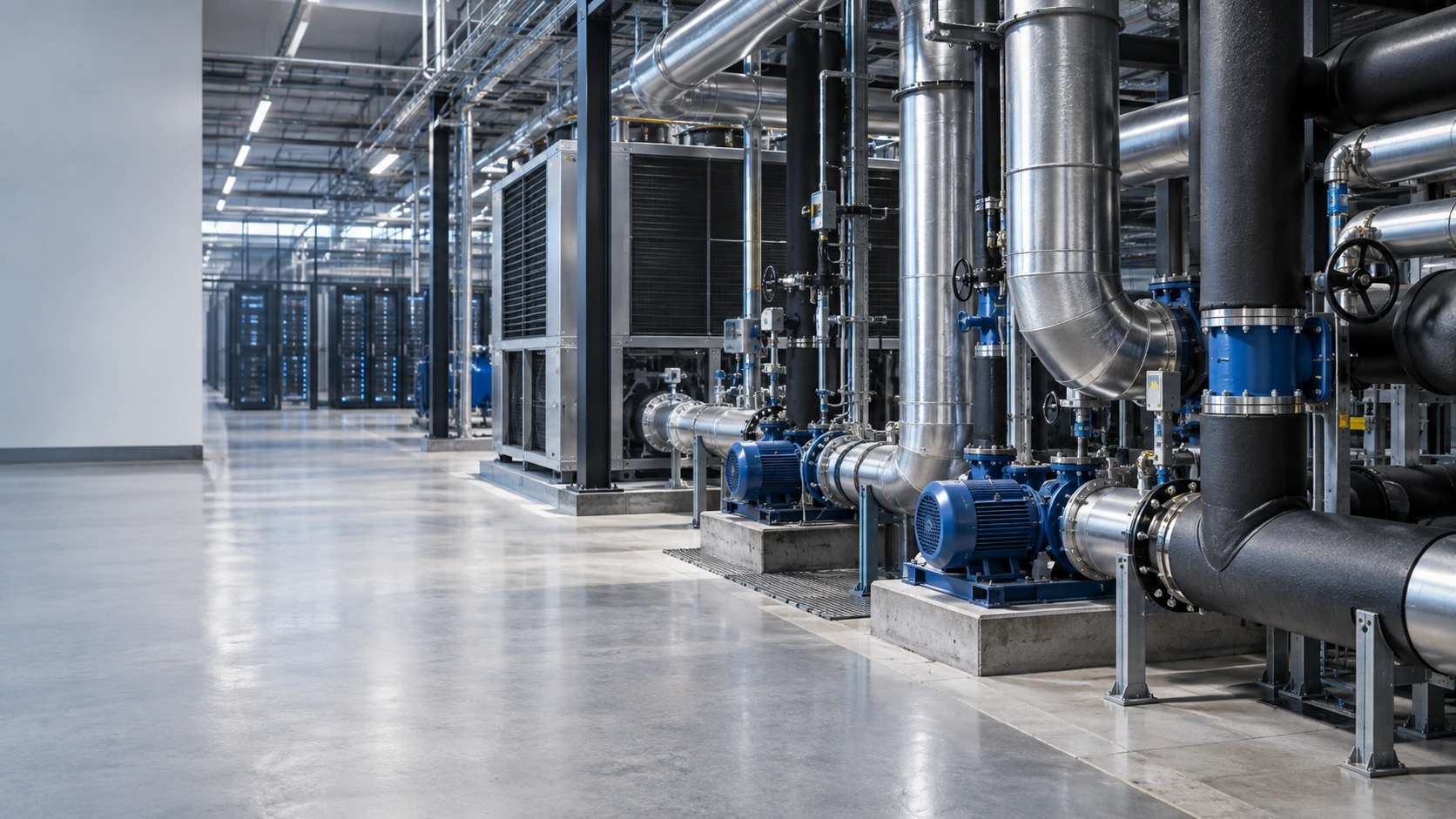
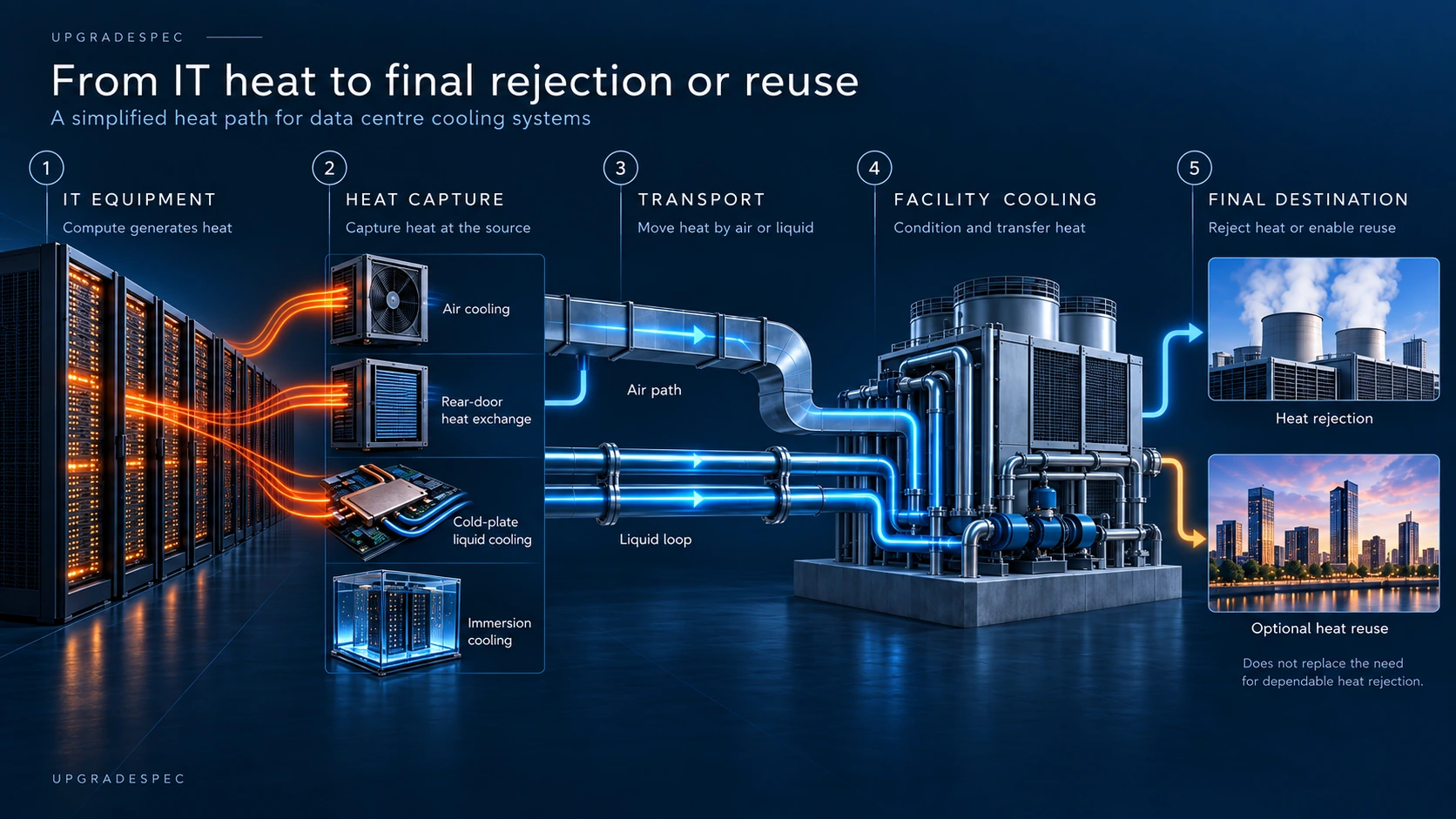
A complete data centre cooling system does more than cool the room. It has to capture heat from the IT equipment, move that heat through the facility and reject it outside the building or make it available for reuse.
That can involve room or rack airflow, liquid loops that collect heat closer to selected components, facility cooling plant and the final heat-rejection path. Many sites use more than one approach at the same time.
There is no single best cooling design for every facility. The right combination depends on workload and heat density, equipment limits, climate, existing plant, retrofit constraints, resilience and maintenance capability. A change at one stage can also move requirements elsewhere in the system.
Types of data centre cooling systems
Start with where the heat is captured and what carries it away. The familiar technology name matters less than whether the full cooling path fits the IT equipment, the facility and the operating model.
Air cooling
- What it does
- Moves conditioned air through IT equipment and manages the warm exhaust path back to facility cooling.
- When to investigate
- The installed equipment is air-cooled and the room can deliver and return air without excessive mixing, bypass or recirculation.
Main questionCan airflow management and the existing facility cooling path support the present and planned heat load?
Investigate nextAirflow, containment, equipment limits and facility-air capacity.
Rear-door heat exchange
- What it does
- Captures server exhaust heat at the rack through an air-to-liquid heat exchanger.
- When to investigate
- Heat needs to be removed closer to the rack while conventional server airflow remains part of the design.
Main questionHow will rack airflow, the liquid connection, residual room load and maintenance access work together?
Investigate nextDoor type, rack airflow, liquid interface and service access.
Direct-to-chip liquid cooling
- What it does
- Uses cold plates and a liquid circuit to remove heat from selected high-heat components.
- When to investigate
- The workload and equipment mix make component-level heat capture useful, especially where relying on room air alone becomes harder to support.
Main questionWhich components are liquid cooled, what heat remains on air, and how does the IT-side loop connect to facility cooling?
Investigate nextCold plates, loop boundaries, CDU need, fluids, filtration and serviceability.
Immersion cooling
- What it does
- Operates electronics in dielectric fluid and transfers the captured heat into a downstream cooling path.
- When to investigate
- The hardware, servicing model and facility can be designed around an immersion architecture.
Main questionIs the system single-phase or two-phase, and how do equipment compatibility, maintenance and the facility connection change?
Investigate nextFluid regime, equipment boundary, service model and downstream heat transport.
Hybrid air and liquid cooling
- What it does
- Uses more than one heat path, for example liquid for selected components while air removes the remaining heat.
- When to investigate
- Different racks, components or deployment phases need different cooling paths in the same facility.
Main questionHow much heat remains on air, where are the interfaces, and who owns each operating responsibility?
Investigate nextResidual air load, interface ownership, controls and facility capacity.
A coolant distribution unit (CDU) is an interface in many liquid-cooling arrangements, not a universal cooling family. It can separate and condition the technology-side liquid circuit and facility cooling. Heat rejection or reuse is the downstream destination for the heat, and reuse still needs a fallback rejection path.
How does data centre cooling work?
Every cooling architecture can be understood by following the same basic chain: IT equipment produces heat, the system captures it, air or liquid carries it away, the facility moves it to the final heat-rejection or reuse stage.
This is the broad system map. The dedicated how-it-works guide will explain the optional equipment and loop boundaries in more detail.
How to choose a data centre cooling system
Choose from the project conditions first, then compare technologies. A system that is technically capable can still be the wrong fit for an existing plant, a maintenance team or a continuity requirement.
Workload and heat-density roadmap
What equipment is installed now, and how could the heat load and air/liquid mix change over the design life?
Heat concentration and equipment cooling readiness affect which capture and transport paths remain practical.
Equipment limits and reliability target
Which manufacturer environmental limits apply, and what operating target is required inside those limits?
An allowable condition is not automatically the same as the reliability target for the project.
Existing plant and retrofit constraints
Which cooling assets and interfaces remain? Can work be phased without losing required continuity?
A new-build architecture cannot simply be copied into every existing facility.
Site and climate
Which economisation or heat-rejection paths remain practical after climate, contamination and engineering checks?
Local conditions change the feasibility and value of lower-energy cooling paths.
Liquid interfaces and serviceability
Where are the loop boundaries? Who owns fluid quality, filtration, pressure integrity, isolation and maintenance?
Liquid cooling adds interface and service responsibilities beyond heat-transfer performance.
Operations, monitoring and continuity
Can the team monitor, maintain and recommission the system with documented procedures and clear accountability?
A technically feasible design can still be a poor operational or resilience fit.
Project stage
Is the unresolved decision about early planning, integrated design, retrofit, commissioning or ongoing operation?
The most useful next research step changes with the stage of the project.
A practical order for the decision
- Define today’s IT load, heat density and expected equipment mix.
- Confirm the equipment environmental limits and reliability target.
- Map the existing cooling plant, heat-rejection path and retrofit constraints.
- Test site, climate, resource, resilience and maintenance constraints.
- Compare cooling families and supplier designs against the same defined scope.
Cooling efficiency metrics: PUE, WUE and CER
Cooling metrics are useful only when you know exactly what they measure. PUE, WUE and CER describe different boundaries, so they should not be treated as interchangeable scores for deciding which technology is best.
PUE - ISO/IEC 30134-2:2026
Supporting-infrastructure energy performance.
- Boundary
- State the measurement category and reporting boundary used.
- Do not infer
- A good PUE does not by itself prove that the whole data centre or workload is efficient.
WUE - ISO/IEC 30134-9:2022
Water-use intensity during the data-centre use phase.
- Boundary
- The published edition is under formal revision and must be checked again before release.
- Do not infer
- Values are not comparable when the measurement boundaries are different.
CER - ISO/IEC 30134-7:2023
Cooling-energy performance for electrically powered cooling used to control data-centre space temperature.
- Boundary
- The standard states an applicability limit for non-electric cooling systems.
- Do not infer
- CER is not a universal suitability score across unlike cooling architectures.
European Union reporting requirements
Jurisdiction-specific reporting and KPI methods where the legal scope and eligibility conditions apply.
- Boundary
- Check the current instrument, thresholds, jurisdiction and applicability before use.
- Do not infer
- European Union reporting rules are not global requirements or project-specific legal advice.
What affects data centre cooling costs?
There is no meaningful global price for data centre cooling. Project cost changes with the IT heat load, what plant already exists, the chosen heat path, resilience, controls, heat rejection, retrofit work and how the system will be maintained.
Existing infrastructure and retrofit work
Which mechanical, electrical, spatial and control assets can stay, and what must change?
Legacy constraints can add enabling works, temporary systems, phasing and verification effort.
Heat capture and distribution
What stays on air, what moves to liquid, and which piping, airflow or interface equipment is required?
The heat-capture method changes both equipment scope and facility integration.
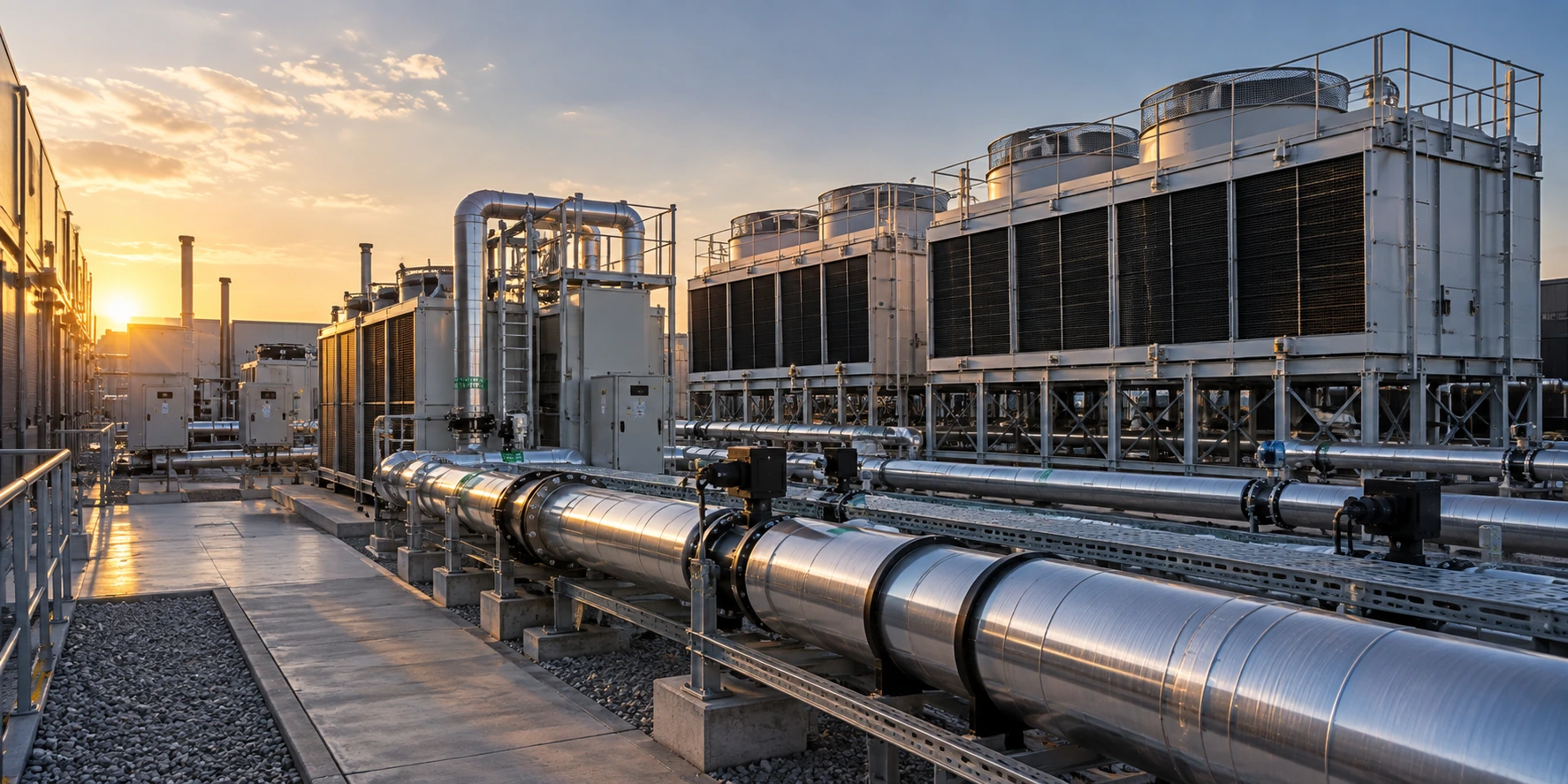
Heat rejection or reuse
What is the final rejection method, and is a fallback path required when heat cannot be reused?
The downstream system can materially change plant, controls and operating scope.
Water and energy dependencies
Which resource boundaries and operating conditions apply?
Resource use depends on the whole system and cannot be inferred from a technology label alone.
Resilience, controls and commissioning
What redundancy, monitoring, controls integration, testing and acceptance evidence are required?
Continuity and verification requirements can change capacity and system architecture.
Maintenance and serviceability
What access, fluid management, filtration, procedures and team capability are required?
Lifecycle labour and operational risk depend on how maintainable the installed system is.
Where should you start?
Start with the decision your project has not yet resolved.
Early planning
Which cooling approaches could fit the expected workload, site and resource constraints?
Build the system shortlist and identify the evidence needed to eliminate options.Integrated design
How do the IT, cooling, controls and facility interfaces work together?
Map the complete thermal path, responsibilities and design dependencies.Retrofit or modernisation
What can the existing facility support while work is phased around live operations?
Document the installed condition, limiting interfaces and staged transition before selecting products.Commissioning
How will the completed system be proven against the project requirements?
Define responsibilities, tests, baselines and acceptance evidence before handover.Operations and improvement
What has changed, what is drifting and which intervention is justified?
Use monitoring, procedures and recommissioning evidence to target the next decision.Reference list15 sources
- Open Compute ProjectCooling EnvironmentsIndustry Association · Global
- US Department of EnergyBest Practices Guide for Energy-Efficient Data Center DesignGovernment · United States
- ASHRAETC 9.9 Data Center ResourcesStandards Body
- ASHRAEWater-Cooled Servers: Common Designs, Components, and ProcessesStandards Body
- ISOISO/IEC 22237-4:2021Standards Body
- ASHRAEEnergy and Thermal Efficiency - AI Data Center Energy Performance FrameworkStandards Body · Global
- ASHRAEIntegrated Design Principles - AI Data Center Energy Performance FrameworkStandards Body · Global
- International Organization for StandardizationISO/IEC 30134-2:2026 - Power usage effectiveness (PUE)Standards Body · Global
- European UnionCommission Delegated Regulation (EU) 2024/1364Government · European Union
- ASHRAECommissioning resource and Guideline 0-2019 contextStandards Body · Global
- ASHRAEAI Data Center Energy Performance Framework - Operations and MaintenanceStandards Body · Global
- ASHRAE, PNNL and NEMAAI Data Center Energy Performance Framework - Introduction and PurposeStandards Body · Global
- International Organization for StandardizationISO/IEC 30134-9:2022 - Water usage effectiveness (WUE)Standards Body · Global
- International Organization for StandardizationISO/IEC 30134-7:2023 - Cooling efficiency ratio (CER)Standards Body · Global
- ASHRAE, PNNL and NEMAAI Data Center Energy Performance Framework - Retrofit and Modernization StrategiesStandards Body · Global
Limitations
- No global cost range is supported.
- No universal cooling-system ranking is supported.
- No supplier shortlist, product recommendation or comparative product-performance claim is supported.
- European Union reporting statements remain jurisdiction- and applicability-specific.
- The 2026 ASHRAE, PNNL and NEMA framework is decision-support guidance, not a mandatory code or standard.
- ISO/IEC 30134-9:2022 remains published but is under revision and must be reverified before release.
- PUE, WUE and CER must retain their defined measurement and applicability boundaries.